









APAC CIOOutlook
About UsConferencePartner With Us
  • Technologies
    • Blockchain
      Data Intelligence and Management
      Digital Transformation
      FinTech
      Generative and Agentic AI
      Low Code No Code
      Mobile Application
      Networking
      Robotics
      Storage
      Wireless
  • Industries
    • Automotive
      Aviation
      Banking
      Construction
      E-Commerce
      Food and Beverages
      Healthcare
      Insurance
      Logistics
      Manufacturing
      Retail
      Supply Chain
      Travel and Hospitality
  • Platforms
    • Microsoft
      Salesforce
      SAP
  • Strategic Solutions
    • Business Intelligence
      Contact Center
      Corporate Finance
      CRM
      Cyber Security
      Data Center
      Enterprise Asset Management
      Enterprise Performance Management
      IT Infrastructure and Services
      Managed Services
      Procurement
      Unified Communication
      Workflow
  • Home
  • CXO Insights
  • Leadership Perspectives
  • Innovation Insights
  • Research
  • News
  • Whitepapers
  • CXO Awards
#

Apac CIOOutlook Weekly Brief

×

Be first to read the latest tech news, Industry Leader's Insights, and CIO interviews of medium and large enterprises exclusively from Apac CIOOutlook

Subscribe

loading

THANK YOU FOR SUBSCRIBING

  • Home
Editor's Pick (1 - 4 of 8)
left
Creating a Global Network

Elizabeth Harper, CIO, GHD

The New Tech Frontier for Utilities

Greg Sarich, CIO, CLEAResult

IT Trends in the Mining Industry

Colin Boyd, CIO, Joy Global Inc

Creating a Tangible Impact through Collaboration

Matt Schlabig, CIO, Worthington Industries

Issues and Trends in Metals and Mining Industry

Supantha Banerjee, VP & CIO, PSC Metals

4 Must-Have Technologies for Metals & Mining

Sharon Gietl, VP-IT & CIO, The Doe Run Company

How Digital Assets are Transforming the Mining and Metals Markets

Jeremy Samuel, CEO, Metalicoin

Mining's Digital Wave

Christine Gibbs Stewart, CEO, Austmine

right

Transforming IT to Digital Technology

Mano Mannoochahr, CIO, GE Energy Connections

Tweet
content-image

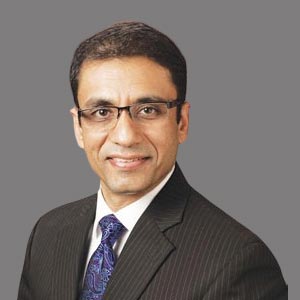
Mano Mannoochahr, CIO, GE Energy Connections

Role of a CIO Today

The role of a Chief Information Officer (CIO) starts with positioning oneself as a transformational and digital change leader within the business. With availability of cloud computing to manage infrastructure layers of the IT stack, CIO roles will become a lot less operational and more strategic in driving the organization’s digital transformation roadmap. One key imperative in this role is to drive and own the agenda for digital change pertaining to their businesses—especially as it relates to transforming core business operations. Chief Digital Officers will typically own external-facing and product related innovation— CIOs, on the other hand, needs to own how insights from these “connected” products can transform the core. CIOs will need to define and operate under a venture capitalistic model and associated principles, to maximize returns on their program investments.

Making Business Counterparts Think Differently On IT

One approach that I have seen work is through a “purpose built” innovation program—a program that would demonstrate “art of the possible” to the non-IT functions on how technology can help reinvent work across the business. The innovation program needs to be executed in the context of various business functions and well aligned to their needs. At the same time, technology mega-trends need to be recognized for their disruptive power and should guide the amount of change they can drive into the business.

CIO can also drive a venture capitalistic model for allocation of funds by developing a well balanced approach to IT investments. Placing bets with a good spread of risk/pay-off profile that can yield significant benefits for big hits. Lastly, CIOs need to find a way to engage the broader organization in a meaningful way by creating culture and structures that allow IT and other business functions be part of the same team— every time and all the time (co-location, cross-pollination of talent etc.)

Technology mega-trends need to be recognized for their disruptive power and should guide the amount of change they can drive into the business

Promoting a culture that has built-in desire to adapt and learn with potential for producing innovative solutions on a steady basis.

Latest Trends

No doubt that some of the most powerful trends today include: 1) Increasing amounts of cheap and powerful sensors, 2) Generated data from the sensors about the world around us, 3) Machine Learning/Artificial Intelligence, and 4) Mixed- Reality. These trends have the potential to equip the workforce with some powerful insights, advisory tools, and innovative human-machine interfaces. Creating step function improvements in business outcomes through productivity and elevated human performance, while also, providing us with the means to run the business differently and leap-frog competition.

Exciting Future Technologies

Although I named quite a few, I would narrow down the list to Machine Learning and Mixed- Reality, because both trends are focused on making people more productive and allowing them to achieve significantly better outcomes. The importance of these two trends is centered within the ability to stretch performance of our workforce through technology. The efficiency promise is an added element, but I am more focused on enabling an increasing portion of our workforce to operate at an “expert” level, by providing them the best-in-class advisory tools. Machine learning and mixed-reality technologies present an opportunity to engage the end-user in a unique way, whether we are talking about a factory-line worker or a sales person in the field that is looking to have an advantage over the competition.

IT Operating Model: A Recap of the last Five Years

At GE, we have embarked on a journey that will fundamentally change IT as we know it. The IT business function is evolving to become Digital Technology (IT to DT). We are focused on driving successful business outcomes and accelerating GE’s digital industrial journey. We are going from the “back-office order-taker” mindset to key drivers of business productivity. Working closely with GE’s Global CIO, Jim Fowler, and the broader council of GE business CIOs, we are shifting our operating structure from one of business-dedicated IT organizations to one that will be more of a hybrid structure. We have defined horizontals that will cut across all of GE and will help us maximize both efficiency and productivity in everything we do. We will define technology blueprints for each horizontal and then align all of our businesses to those blueprints and strategic set of products. The creation of the new Digital Technology business function supports GE’s transformation into a true digital industrial leader; one that delivers internally to GE, our customers, and the world through our Predix platform.

tag

Machine Learning

Cloud Computing

Weekly Brief

loading
Top 10 Metals and Mining Technology Solution Companies - 2019
Top 10 Metals and Mining Technology Services Companies - 2019
Featured Issue

I agree We use cookies on this website to enhance your user experience. By clicking any link on this page you are giving your consent for us to set cookies. More info

APAC CIOOutlook
Follow on LinkedIn

About

  • Home
  • About Us
  • Partner With Us

Stay Connected

  • Subscribe
  • Newsletter
  • Sitemap

Contact Us

  • editor@apacciooutlook.com
  • sales@apacciooutlook.com
  • marketing@apacciooutlook.com

Legal

  • Editorial Policy
  • Privacy Policy
  • Terms of Use

© 2026 APAC CIOOutlook. All rights reserved. Headquarteblue in Fort Lauderdale, FL, USA.

This content is copyright protected

However, if you would like to share the information in this article, you may use the link below:

https://metals-and-mining.apacciooutlook.com/ciospeaks/transforming-it-to-digital-technology-nwid-4696.html